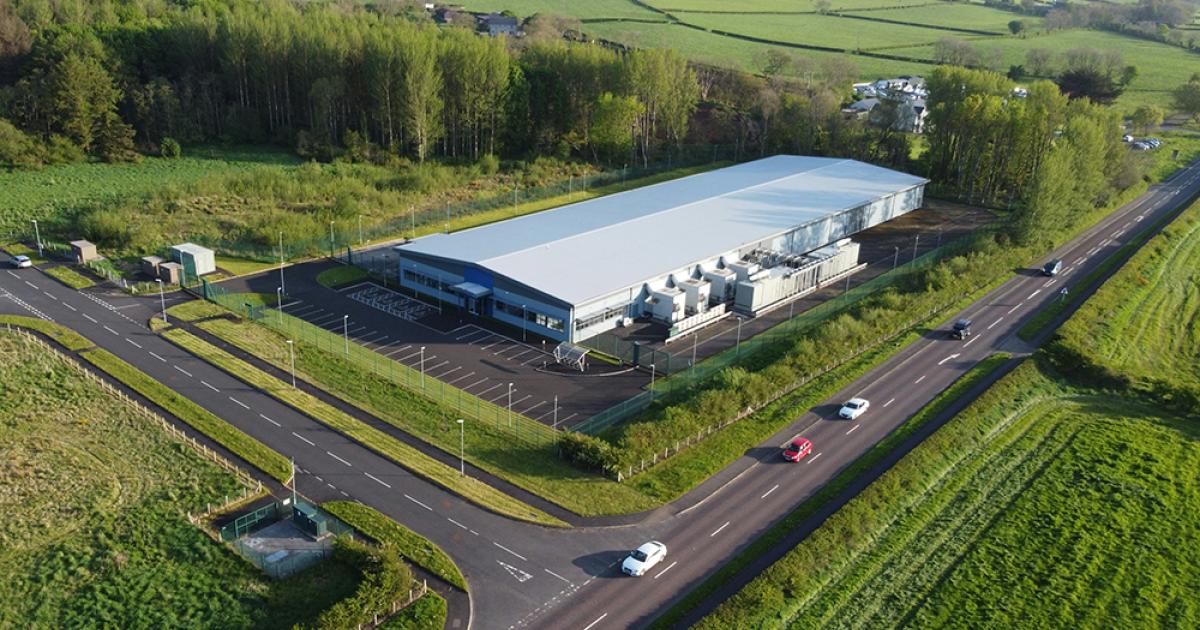
Data centers, seeking land and electricity, are top of mind in rural America and for good reason.
Expected to lift new U.S. energy demand by 30% by 2030, data centers are setting their sights on electric co-op country, where power is affordable and reliable, and they have acreage to spread out.
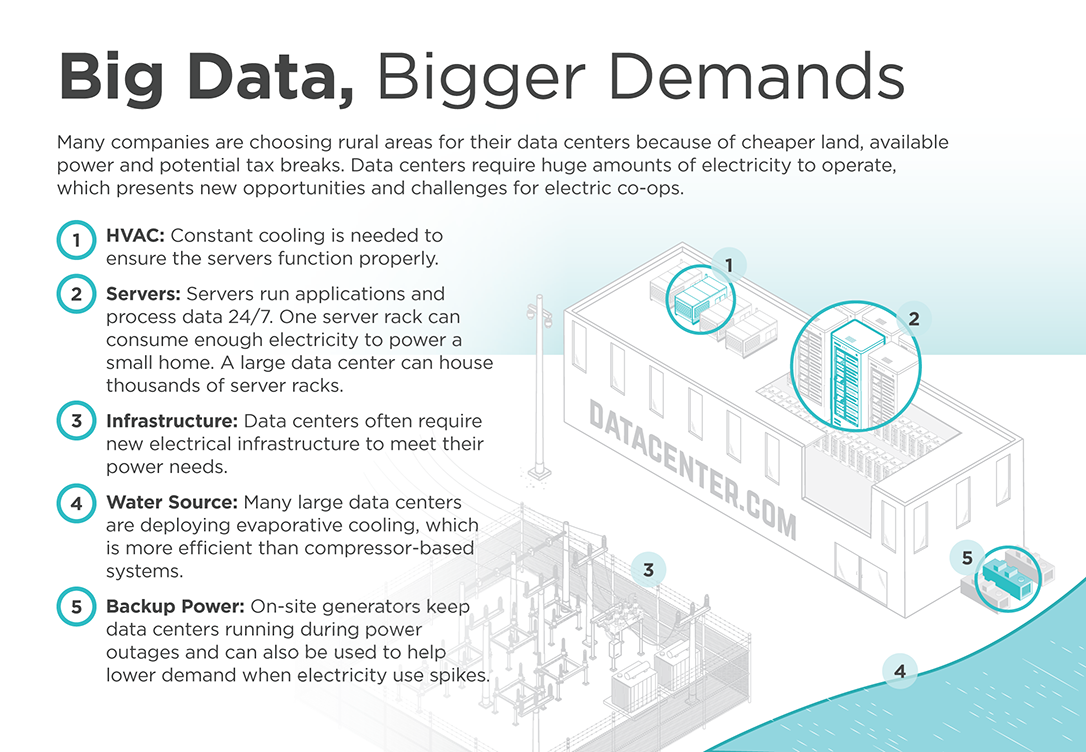
Data centers connect the world through digital networks, which requires a significant, steady and uninterrupted flow of electricity. They electronically store, manage and transmit internet-based information 24/7 to ensure the constant operation of Amazon, Microsoft, Google, artificial intelligence (AI) and the internet, with all its digital businesses, shopping, streaming and social media sites.
A typical data center can require 100 megawatts (MW) of electricity, which could serve nearly 100,000 households every day. A growing number of data centers, called hyperscalers, are much larger and can demand upwards of 600 MW.
So, can electric co-ops take advantage of data centers’ gigantic demand and protect members at the end of the line?
“Yes, it’s possible for North Dakota’s electric cooperatives to serve data centers. A few actually do or have been announced. But only where it makes sense in that it doesn’t affect the existing members, both in terms of cost and reliability,” says Josh Kramer, executive vice president and general manager of the North Dakota Association of Rural Electric Cooperatives. “Our generation and transmission cooperatives in North Dakota have implemented ‘large load programs,’ which essentially protect the existing members from paying the costs to bring large users of electricity, like data centers, onto the system. Data centers must pay those costs. The cost causers are the cost payers.”
“Co-ops are uniquely positioned for this work,” says Allison Hamilton, markets and rates director for the National Rural Electric Cooperative Association. “Their commitment to serving all members – not just the large load – means they approach these projects with care, collaboration and a focus on long-term community benefit.”
Electric co-ops serve almost 300 data centers nationwide, mostly in Virginia, Texas, Illinois, Oregon and Georgia, with another 150 under construction to meet the escalating global needs of AI, digital programs and storage.
Lower land costs plus tax incentives for locating a business in rural areas are attractive to data center developers. North Dakota’s cool climate is another bonus, because it provides natural cooling for data center servers and equipment, reducing energy costs.
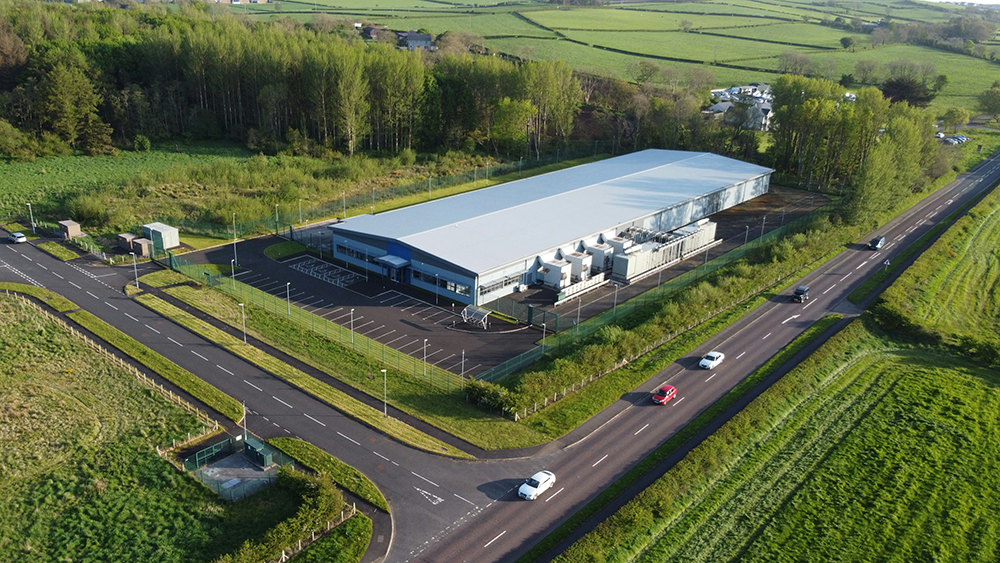
These massive concrete, windowless structures house thousands of computers and cooling systems to keep them running, which translates into massive energy requirements. And while a single data center structure might have a footprint larger than a football field, a data center campus often includes multiple buildings and supporting infrastructure covering hundreds of acres.
Serving data centers – or any large load – can be beneficial for co-ops, too.
Having a constant large energy consumer can help keep rates stable, as the fixed costs to operate an electric cooperative are spread across more kilowatt-hour sales.
Load growth can also help support investments in the local grid. Upgrades in new substations, stronger lines and smarter technology could benefit all members and strengthen grid reliability.
“The predictable, around-the-clock nature of these large loads can create stable revenues and reduce upward pressure on rates for the entire membership,” Hamilton says. “For co-ops, data centers offer long-term load growth, revenue stability and potential for grid modernization. These projects can also bring new tax base, jobs and investment, and attract additional businesses to the area.”
WHAT THE FUTURE HOLDS
Ask any electric cooperative manager in North Dakota about data centers, and they’ll tell you they’ve been contacted by developers and companies interested in locating a data center in co-op country.
Because of the nature of the energy requests – asking for 50 MW, 100 MW or more – electric cooperatives have responded by creating policies, approaches and large load programs to responsibly serve these new energy-intensive industries, while insulating existing co-op members from the investment and ongoing expenses of serving them. These strategies can include requiring a developer to pay upfront costs, including engineering studies, deposits and other necessary items before a contract is signed. Rate structures, contract provisions and internal policies help mitigate financial risks, and utilities are asking for letters of credit, deposits or guarantees to cover potential stranded investments or defaults.
“As co-ops make these business decisions based on their own unique circumstances, they are learning from each other,” Hamilton says. “Sharing their experiences in addressing the challenges of serving large industrial loads, making sure assets are paid for upfront and their high-capacity demands are met are ways co-ops are avoiding cost-shifts to members.”
“No matter what the future holds, our priority as electric cooperatives will be supporting growth with fairness. That means listening to our members and local communities, ensuring large-scale energy users pay their fair share, and keeping reliability and affordability our north stars,” Kramer says.
___
Cally Peterson is editor of North Dakota Living. She can be reached at cpeterson@ndarec.com.
Cathy Cash writes on consumer and cooperative affairs for the National Rural Electric Cooperative Association, the national trade association representing more than 900 local electric cooperatives.