North Dakota voters to decide issue of free school meals

Photos by NDAREC/Kennedy Delap
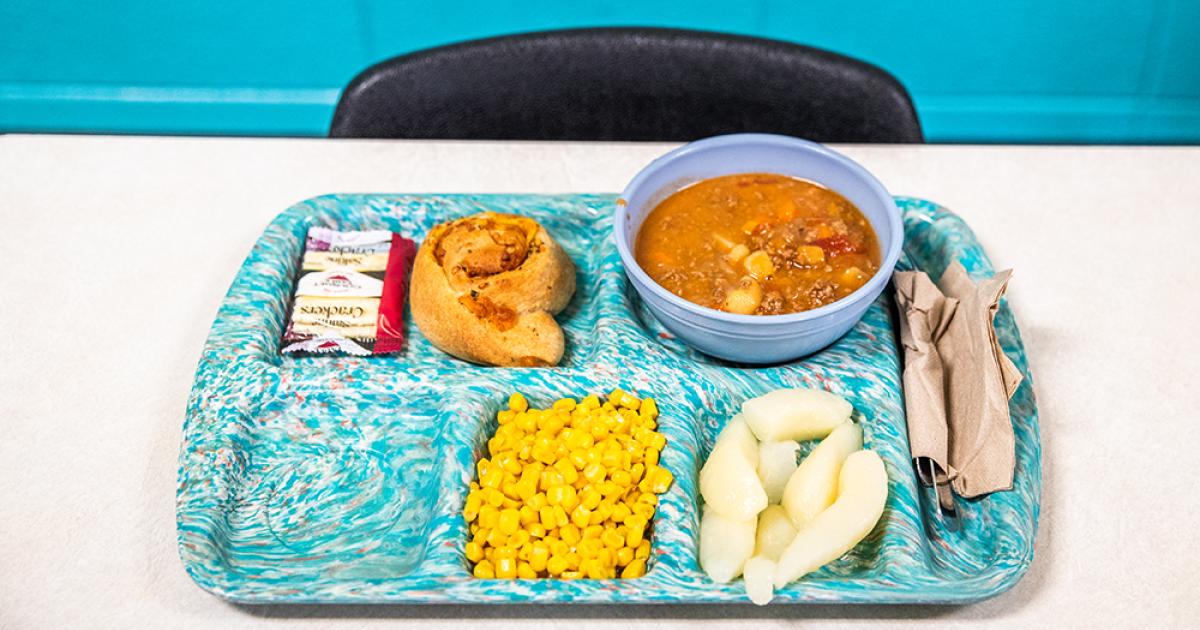

As students across the state settle in for another school year, North Dakota voters will decide whether to fund the food that fuels them.
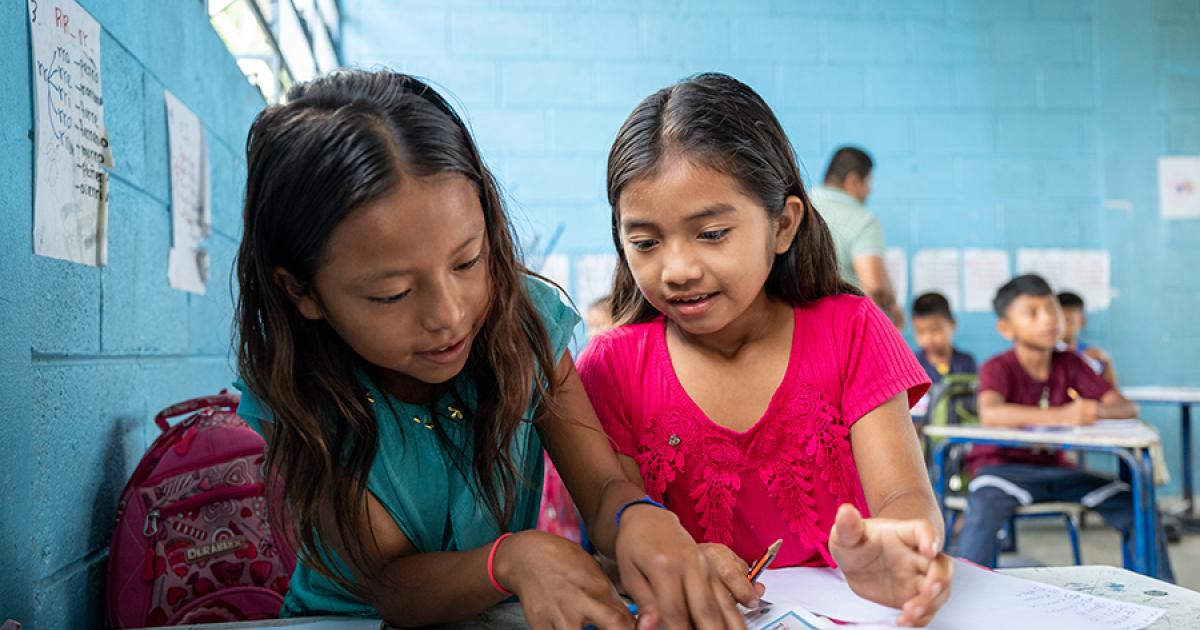
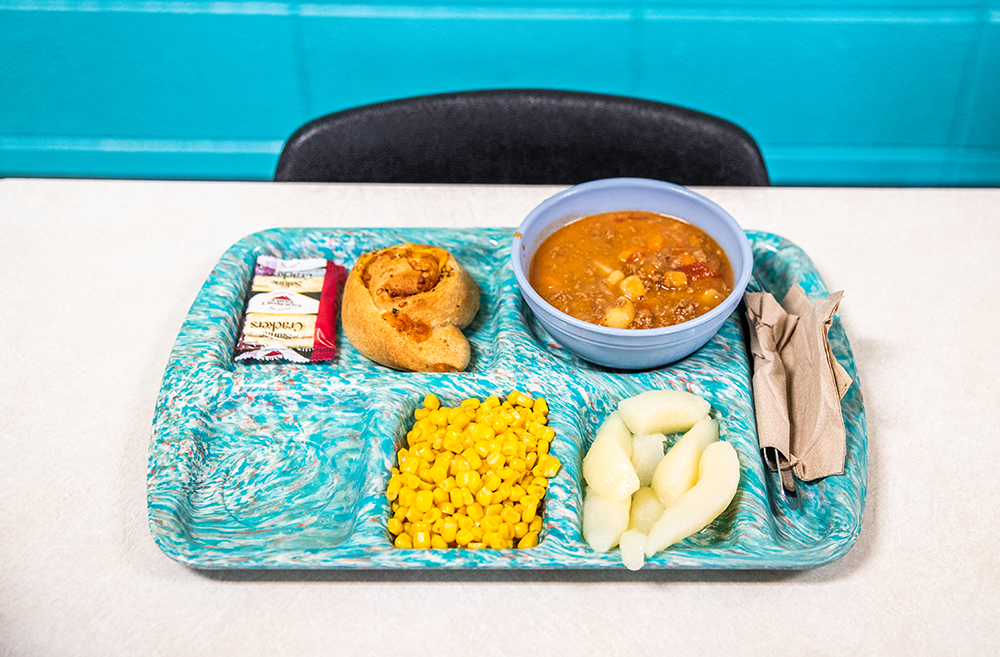
If passed in the November general election, a constitutional measure brought forth by a citizen-led coalition – Together for School Meals – would require state funding for daily school meals. Measure 2 would provide one free breakfast and one free lunch each school day to every student enrolled in public schools and public charter schools. Private and tribal schools may also opt-in for the program.
With nearly 120,000 public school students in the state, the N.D. Department of Public Instruction (NDDPI) estimates the price tag of universal school lunch would be around $133 million for the next biennium.
The measure still allows legislators to determine how to fund the program, but calls for the state’s earnings from its Legacy Fund be used as a “plan B” if no alternative is set. The Legacy Fund is created from a portion of the state’s oil and gas tax revenue, with investment earnings deposited back into the general fund after each biennium to help fund state projects and property tax relief.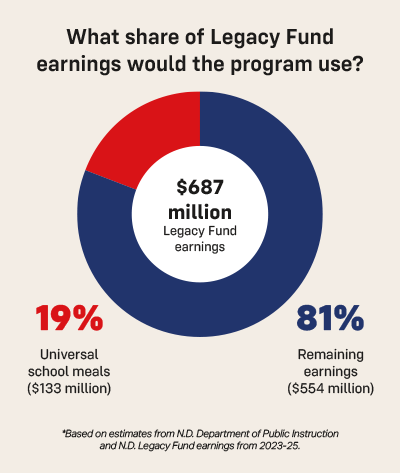 Last biennium, nearly $687 million in earnings was deposited into North Dakota’s general fund.
This isn’t the first time North Dakota lawmakers studied funding school lunch. In recent years, legislators have debated several approaches to help families cover the cost of meals for their children.
Anti-lunch shaming legislation
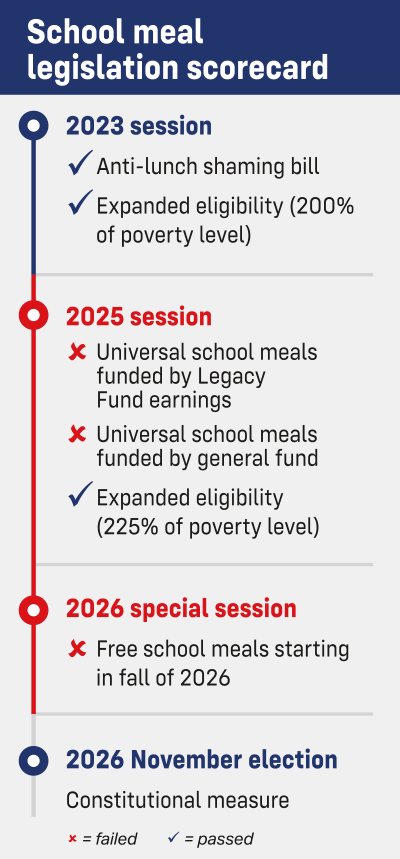
In 2023, Gov. Doug Burgum signed House Bill 1494, often referred to as the anti-lunch shaming bill, which prohibited schools from refusing to serve or offering stigmatizing meals to students with unpaid balances or insufficient funds. During the same session, legislators also voted to expand eligibility for free or reduced lunch, allowing more families to receive assistance.
It appears schools are complying with the anti-shaming legislation and serving students regardless of debt, according to testimony submitted to the Legislative Audit and Fiscal Review Committee this March.
While the legislation may help ensure more students receive meals, it does not address the growing debt schools are incurring in the process. In June, Lynelle Johnson, director of child nutrition and food distribution with NDDPI, reported 79 of the state’s 193 districts totaled $1.1 million in school meal debt. The other districts did not provide information on meal debt.
Since federal rules do not allow North Dakota schools to use federal funds to cover uncollectible meal debt, many districts have adopted their own strategies. Some schools draw from their own general funds, while others accept donated funds and/or take collections actions against households.
 Tried and failed legislative measures
Since the passage of the anti-lunch shaming bill, the topic of school meals continues to pop up each legislative session.
In 2025, two bills proposed different funding mechanisms to pay for universal school meals. Both were defeated. Instead, legislators once again further expanded eligibility for more families to participate in free or reduced meals.
During a special session in January, a final attempt was made to begin offering free school breakfast and lunch starting this fall with a $65 million investment. It narrowly failed in the Senate.
“We essentially brought it through two regular sessions and then it came up in the special session again. We stayed out of it with the special session,” says Robin Nelson, chair of Together for School Meals. “It was just the right thing to do to bring it to the ballot.”
Pros and cons of the measure
The measure’s sponsoring committee collected well over the required number of signatures to certify it for the ballot. Nelson says she feels voters were motivated to take action after legislation failed.
Opponents, concerned about both the cost and use of the constitution to establish the program, worry it would be difficult to change if it didn’t work. Unlike other laws passed by the Legislature, a constitutional measure cannot simply be revised or repealed through a normal legislative process. Changing it would require another vote of the people.
Others question whether taxpayers should be funding meals for all students, especially those who can afford to pay. The state currently covers free school meals for a family of four earning about $72,000 a year.
Yet supporters argue hunger does not follow income levels, especially as the cost of living continues to rise. They say further eliminating stigma, returning money to families’ pocketbooks, incentivizing school attendance and fueling learning are all reasons the measure is receiving widespread support.
Schools support local food systems
While part of the debate around the initiated measure centers on how to address food insecurity, North Dakota schools already play a significant role in connecting students with nutritious food while strengthening the state’s local food economy. Through NDDPI’s Farm to School program, many schools are providing healthy meals for students and creating reliable markets for local producers.
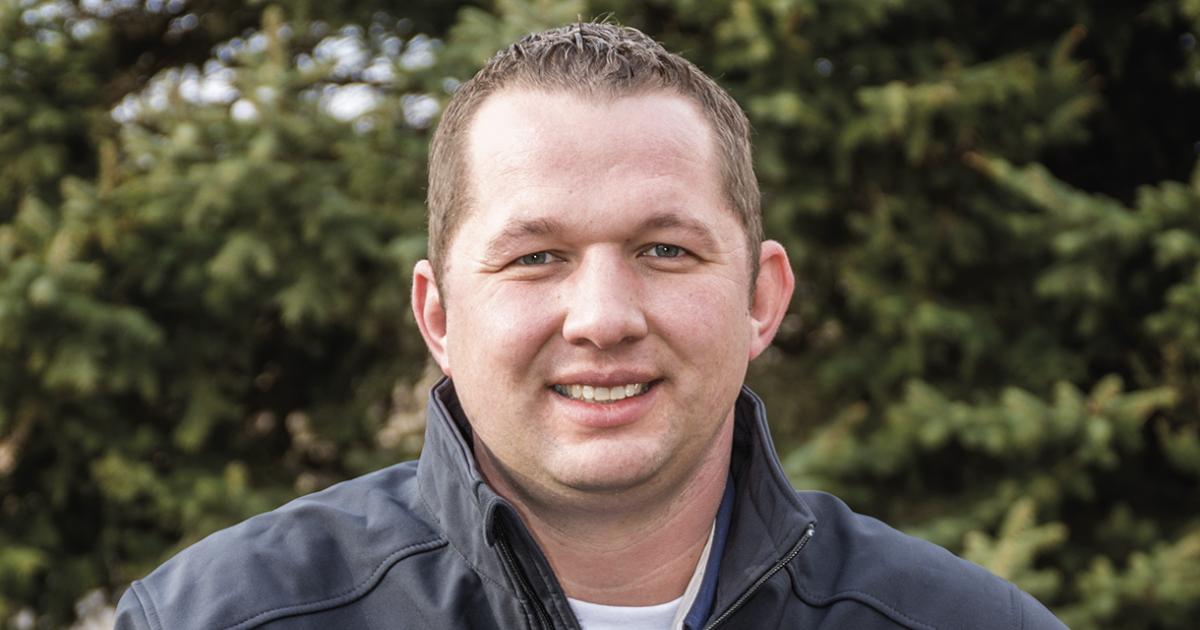
“Schools have the largest buying power in North Dakota,” says Amanda Olson, farm to school specialist with NDDPI. Collectively, North Dakota schools would be the largest institutional purchaser of food in the state.
That purchasing power gives schools a unique opportunity to influence where food comes from and how it reaches communities. When schools buy locally, they help create dependable demand for North Dakota-grown products, keeping more food and more food dollars in the state while improving access to fresh foods for students.
As both a parent and a farmer in McHenry County, Olson sees the challenges of food access firsthand. Following the closure of her local grocery store, even routine trips to buy milk require planning.
“We're a huge exporter of food, and not just our commodities,” she says. “We don't keep a lot of our own food in North Dakota.”
For Olson, expanding local purchasing is one way to address the disconnect. She works with larger school districts, including Bismarck and West Fargo, to increase purchases from local producers, while helping smaller districts like Bowbells grow relationships between students and nearby farmers and ranchers.
One benefit of those partnerships, Olson says, is the consistency they provide. Schools gain access to locally sourced food for student meals, while producers gain a dependable market that can help them plan production from year to year.
Expanding those opportunities statewide, however, would require more producers, infrastructure and support. Olson says the program is still young, with plenty of room to grow with the right investment and participation.
“That takes a lot of people involved to get that figured out, especially for efficiency. But we’re getting there,” Olson says optimistically.
Whether the measure passes or not, Olson sees school meals as an opportunity to address more than one challenge at a time. Every meal served represents not only food for a student, but also a potential investment in North Dakota farmers, ranchers and food businesses.
As North Dakota voters head to the polls Nov. 3 to decide whether the state plays a role in funding universal free school meals, schools will remain a powerful force in determining where food dollars go and who benefits from them.
___
Hope Sisk is managing editor of North Dakota Living. She can be reached at hsisk@ndarec.com.