
6-IN-1 meats processes all species, including beef, sheep, pigs, elk and more. To learn more, visit 6in1meats.com. Carnis Meats conducts value-added meat processing for local ranchers and farmers and also has a retail location located in north Bismarck. Visit carnismeats.com.
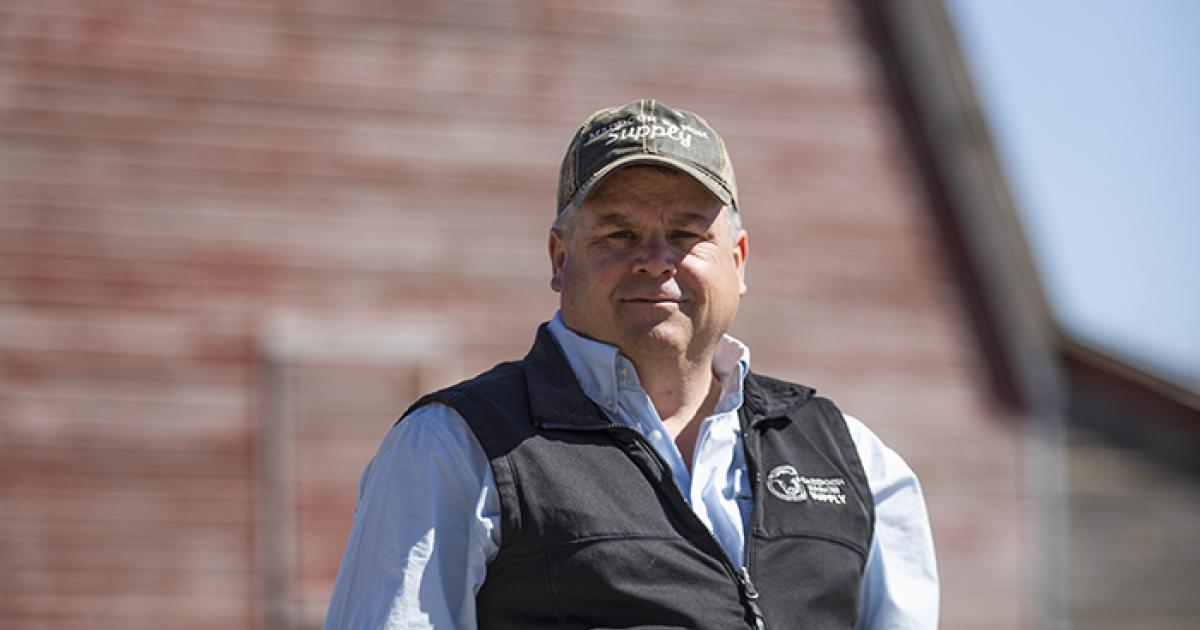
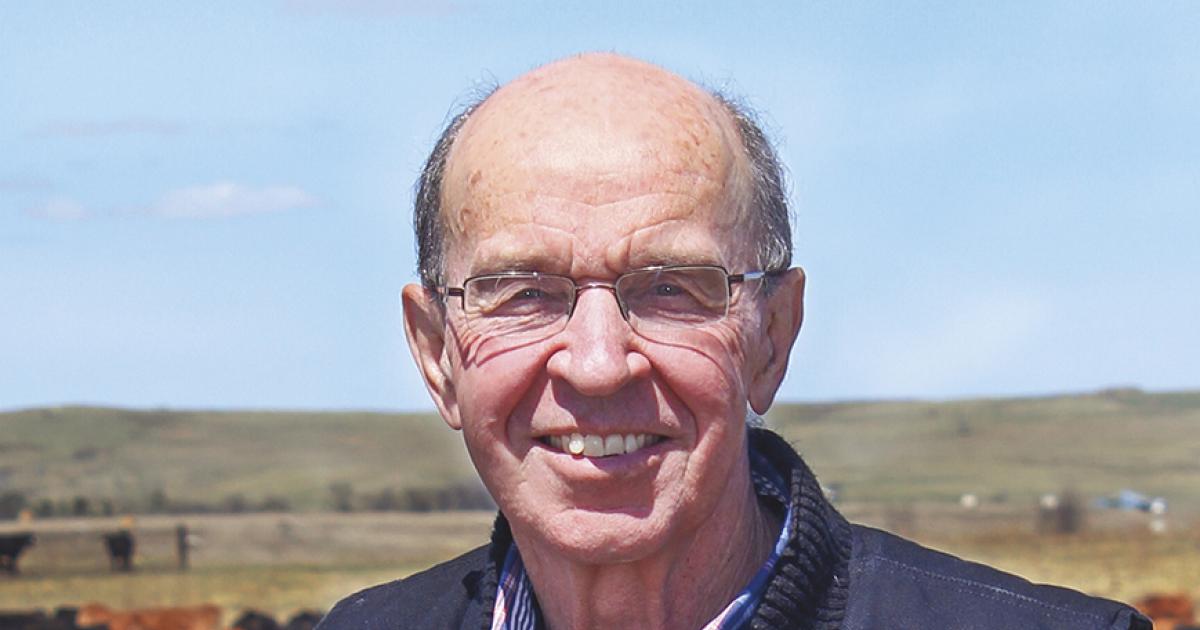
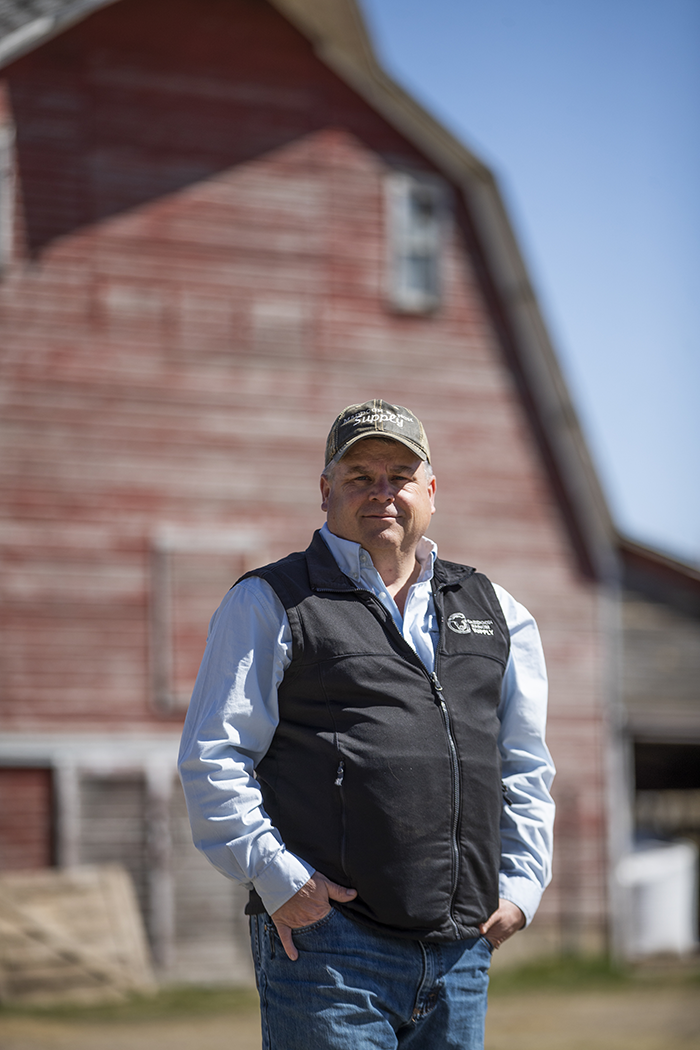
Brian Maddock. Photo by NDAREC/Kennedy Delap
While farmers across the nation faced an economic collapse during the 1980s farm crisis, Brian Maddock studied.
As a legacy farmer, his family heritage runs deep. Maddock Ranch, located near the town of its namesake, traces back to Brian’s grandfather, who homesteaded in the area in 1889; the same year North Dakota gained statehood.
But it wasn’t until Brian attended a course on holistic resource management (HRM), that he put his faith into treating the ranch as one interconnected ecosystem. It worked.
Today, this fourth-generation farm – thriving beyond Brian’s original vision – includes a network of businesses. The family now operates Maddock Ranch and Maddock Ranch Supply in Harvey, alongside two meat shops: 6-IN-I Meats in New Salem and Carnis Meats in Bismarck.
Northern Plains Electric Cooperative provides power to the Maddock Ranch.
The sum of the whole
The HRM method looks at the whole of the ranch, rather than isolated parts.
“My dad took that original course in HRM and started thinking about grazing management. It started with how to rotate cattle to give pastures rest, how to fence appropriately and how to manage your grasses and your soils. It’s evolved into using cattle and technology to build soil health. It’s been quite a journey over the last 30 to 40 years,” says Travis Maddock, Brian’s son.
Everything at Maddock Ranch is built around the idea of the “whole” of the system. It starts with the health of the soil and plants – full of microbes and bacteria – which produce healthier grasses and healthier grains, and ultimately, healthier meat.
As founding members of the North Dakota Grazing Lands Coalition, the Maddock family also spends a lot of time with like-minded folks exploring new ideas, techniques and new science.
The science part is big. Travis, who earned his Ph.D. in ruminant nutrition with a master’s degree in meat science, brings a wealth of knowledge to the Maddock Ranch. Coupled with his experience as a research scientist at North Dakota State University and the University of Florida, he adds an element of expertise to the operation.
Building on that background, Travis conducted food safety training and consulting for the food and feed industries, including Hazard Analysis Critical Control Point, which helps processors identify, evaluate and control food safety hazards before they occur, benefitting his meat-processing facilities.
After all his work and research in different regions, Travis and his, wife, Mistte (also a business partner), moved back to the ranch around five years ago. He and his brother, Shane, and his wife, Lindsay, are partners in both the ranch and Maddock Ranch Supply.
Promise in the plains
When Travis looks across the North Dakota landscape, where others see prairie, hills and sky, he sees untapped potential.
“In North Dakota, we produce so many wonderful things, but we send them to someone else to process,” Travis says, pointing to pulse crops, such as beans and chickpeas, grown in abundance here and then processed in Missouri, Colorado or Texas. The same is true for feeder cattle.
“We produce the best feeder cattle in the world. Our climate actually makes us better herd managers, yet we send our calves to Nebraska, Iowa or Kansas to be fed and harvested,” Travis says.
He believes it needs to change.
If North Dakota invested in its own processing capacity, Travis says, it would create more value in the state. It could also create jobs, expand livestock production and strengthen the future of agriculture. And with all the available wide-open spaces, it’s an ideal location for this type of expansion, especially considering technological advances in recent years that focus on stewardship.
From producer to passionate processor
Supply-chain issues during the pandemic made Travis look into the meat processing business in North Dakota. He saw real gaps.
“Supermarkets were having a hard time sourcing beef and a few area farmers tried to step in to fill that void,” Travis says. “But you have to harvest quite a few cattle to make the economies of scale work.”
That reality led him down a different path. In late 2020, when the owners of Prairie West Meats in New Salem decided it was time to sell, Travis partnered with fellow beef producers to purchase the facility. Together, they relaunched it as 6-IN-1 Meats, representing the partners involved.
And here’s where the idea of a regional food hub starts to make sense. The more Travis learns about the model, the more he sees how it might connect to producers like him. Most importantly, he sees the hub’s potential to sustain rural grocery stores and the communities that depend on them.
Through it all, he’s found being an entrepreneur suits him.
“I'll tell you that over the past four or five years, as I've done this entrepreneurial journey, starting here with the store and everything else. I wake up ready to roll,” Travis says. “I get up every morning and I'm excited. It's a lot. But I tell you, I've really found my passion.”
___
Clarice Kesler is the communications director for the North Dakota Association of Rural Electric Cooperatives, leading strategic communications including North Dakota Living, digital communications and media relations. She can be reached at ckesler@ndarec.com.